

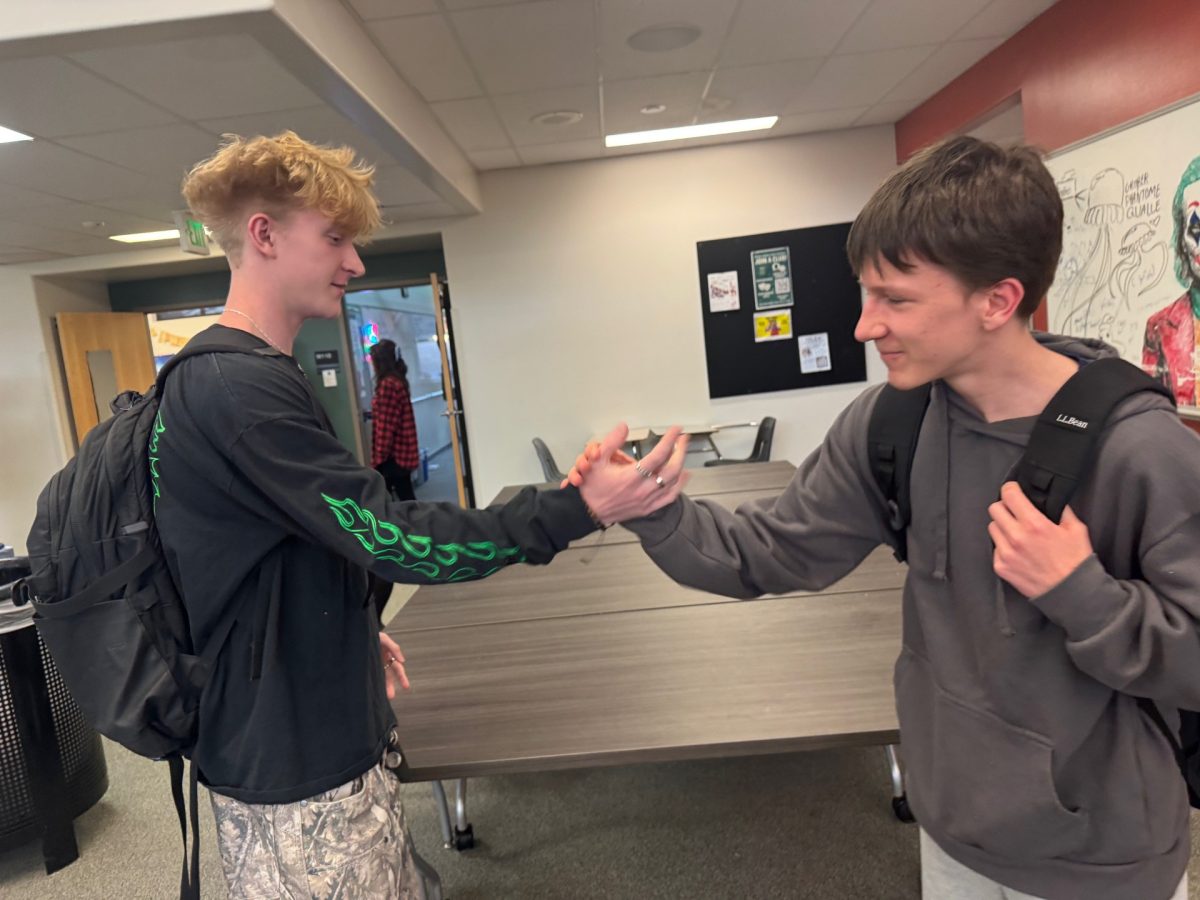
Fossil Ridge High School junior Henry Grabler has undergone two open-heart surgeries, one at age three and another at 13, both to repair holes in his heart.
Grabler’s condition is a septal defect, which causes blood from the left and right chambers of his heart to mix. He has two different holes in this area. This results in low oxygen levels, fatigue and serious long-term health risks if left untreated. According to a study in the American Journal of Medical Genetics, about 0.02–0.05% of babies with congenital heart defects are born with both an atrial and ventricular septal defect, making Grabler’s condition extremely rare.
The first hole was discovered at birth.
“The doctors told my parents I had the hole, but it wasn’t serious at the time,” Grabler said. “When I was three, they patched the first hole. I don’t remember much, but they said I couldn’t run for long or even just play around without getting pale or out of breath.”
Grabler continued living normally after the first surgery until things changed years later in middle school. At 13, during a routine checkup, doctors discovered a second hole that needed immediate attention.
“I remember hearing the doctor say, ‘You’ll need surgery again,’ and it felt like my heart dropped,” Grabler said. “I was scared I wouldn’t wake up. That’s all I kept thinking.”
Grabler spent two weeks in the ICU at Children’s Hospital Colorado and then another month recovering at home.
Doctors inserted a special medical patch, similar to a sponge, to close the opening between chambers, which helps prevent blood from mixing. The surgery improved his oxygen levels, but it didn’t erase the effects entirely.
“I couldn’t walk for three days,” he said. “It felt like someone had stacked bricks on my chest. Even breathing hurt, and I wasn’t even allowed to shower.”
He remembers the loneliness that came after the surgery.
“My friends were all in school, living normal lives while I was in a hospital bed trying to stand up without passing out,” Grabler said.
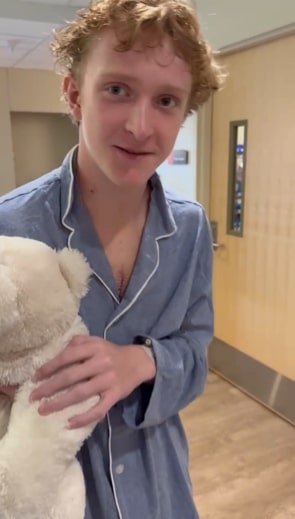
(Rebecca Grabler)
This sudden change of lifestyle took a toll on Grabler’s mental health.
“I felt helpless for a long time. When you’re recovering, you can’t really do anything on your own,” he said. “It makes you feel weak.”
His support system helped him through it.
“My friends visited me in the hospital, and my family never left my side. That meant everything. They reminded me I wasn’t alone,” Grabler said.
Since recovering, Grabler still faces many daily challenges, and according to Grabler he’ll still never be the same.
“I still can’t lift heavy or play sports. If I push myself too hard, it could be really bad for my heart,” Grabler said.
Grabler misses being part of a team and playing sports.
“I always wanted to do weight training or track. Now I just have to watch,” Grabler said.
“My heart might never be 100% normal, but I’m doing better than I ever thought I would at 13,” Grabler said.
Doctors told Grabler he might need another procedure in adulthood, but for now, he’s okay.
Grabler hopes his story will help other students not take what they have for granted.
“Most people don’t appreciate what they can do, run, lift, play sports, or even just breathe normally,” he said. “I’d give anything to be able to have that.”