

Living in modern times, with modern technology and ever increasing demand for power, it is arguably as essential to have working power as it is to have running water.
With an overreliance on modern conveniences like refrigerators, heaters, and life-saving medical devices, which are among the things that almost everyone living in the United States relies on, having them stripped away for up to eleven hours doesn’t just mean no more entertainment, internet, and television. It means all the food in your fridge has turned to rot, and it means you have to live with uncontrollably hot days and below-freezing nights. For those who need an oxygen mask or other life-saving equipment, an event like this could very well be life-threatening.
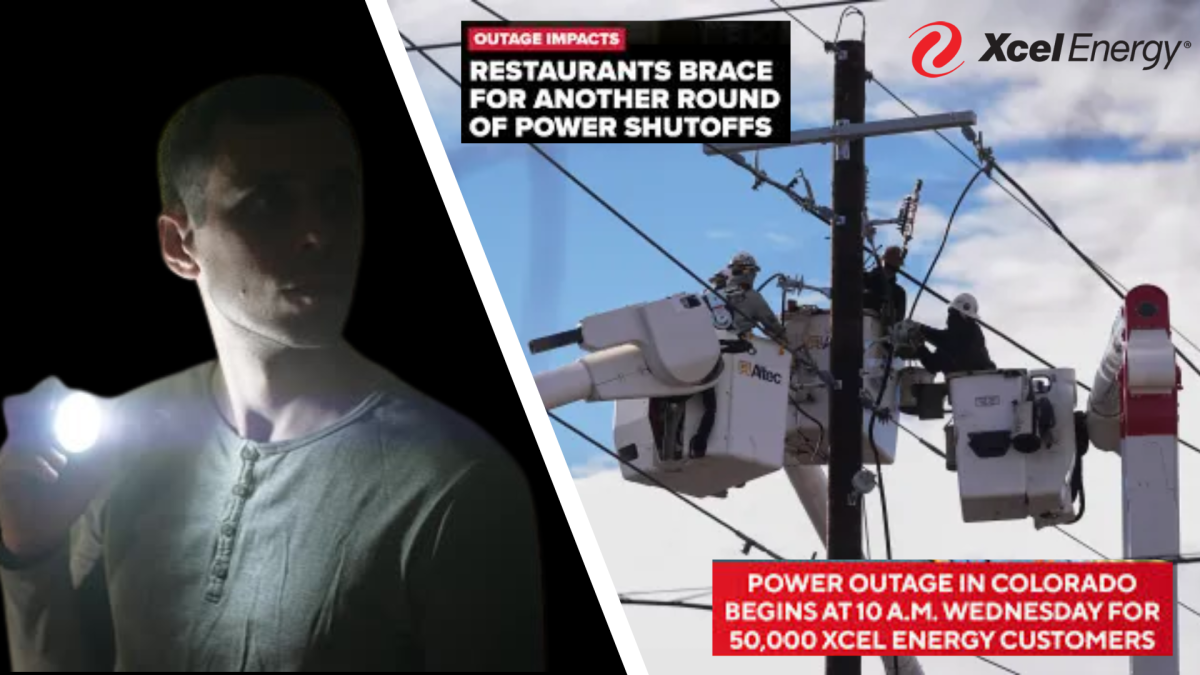
Colorado residents have been experiencing controlled power shutoffs since December 17, 2025, due in most part to high wind events throughout the state. One of the underlying causes was the Marshall Fire in December 2021, Xcel Energy having been deemed partially at fault for their above-ground power line that became unmoored in the wind and started the fire. It destroyed over 60,000 acres of land, 6,000 homes, and killed two people. They ultimately concluded that their solution to prevent another disaster during wind events is to cut power.
This is in good faith, and several residents have recognized and decided for themselves that having no power for a few hours is worth preventing another Marshall Fire.
“The first time that the power went out, it was in the middle of the night, so I woke up. My computer for school wasn’t charged, no hot water. Making breakfast was basically just cereal and milk because those were the only options, because everything, like my appliances, needed power to cook, living without light,” said Drew Seufer, a student at Fossil. “I was running to my truck to charge my phone every couple of hours because that was my flashlight…We didn’t have a generator.”
Seufer talks about how lucky he was that if the temperature hadn’t been warm, his pipes could have frozen, and he, along with other residents, could have been in a lot of trouble.
Philip Broste, teacher and owner of a recording studio in the same area, said, “I have a surplus of energy from my solar panels…I’ve had little to very rare short outages.” Along with owning a generator, Broste uses a different company than Seufer and Darren Marshall, Poudre Valley REA.
Marshall has been a customer of both Poudre Valley REA and Xcel Energy.
“If you took all of my REA power outages when I lived in Camino del Mundo, for what, 13 years, 12 years, they may have not added up to as long as just those three power outages.” One of which he claims was “11 and a half hours long, that is the longest blackout I’ve ever been a part of in my life, and I am sixty.”
Seufer hopes for improvements in accuracy or clarification on shutoff requirements. He claims, “The wind was not crazy at all, so it was kind of just like, okay, we could have the power on now, but it’s not on right now because you guys are saying there’s high winds…eventually the wind did pick up, but they kind of turned it on earlier than I would have.”
Xcel informs its customers via text, telling them the expected shutdown times, sometimes 24 to 12 hours in advance, but for some, they claim they weren’t warned at all.
Marshall is also frustrated that they have inconsistent timing.
“We had a two-hour shut off that they didn’t notify us until the last minute.”
There was another occasion when a shutdown was supposed to occur at 8 am.
“According to their message from a few days ago, but it didn’t start until almost 10 am, so we thought we had passed it,” he said. “They’re supposed to give us a warning. They did on the first one, they gave us a really bad warning on the second one, it was bad. Botched communication because nowhere did I get the 23 texts and the 43 emails that they’re going to shut it off.”
Xcel did respond to a few questions about how Xcel determines which areas are to shut down during these high wind events. Xcel stated that they monitor areas on a local level and respond when an event is anticipated, sending out their warning message to users and cutting power temporarily.
Xcel stated that underground lines are very expensive, and in some areas, not possible to run.
Xcel claimed that they are always updating their technology to improve the general uptime and reliability.
Xcel said they are evaluated by the state on lost power; if it surpasses a threshold, they will rebate those affected. They did not specify more on the threshold itself or on the method customers would receive reimbursement.
“I still want to know as a consumer, what are the particular rights I have to either have recourse about the power that was lost, my father, who is eighty-two years old, sitting in darkness now, fortunately, he isn’t on a medical oxygen machine,” said Marshall.
“I just put up a garage heater…and it’s in there because I have two gas-powered boats that I can’t winterize, and if that drops below freezing, then they’re gone,” stated Marshall.
On Xcel’s website, they claim 99.9% reliability. Despite such frequent shutdowns, they responded that on an individual level, since they have millions of customers, 99.9% of them have reliable energy.
As residents in Colorado face increasing fire risks, controlled shutdowns are being pushed as the new normal. While Xcel claims that these outages are necessary to prevent disasters, the affected customers are unsatisfied with the lack of communication on policies and warning notifications. Many are at risk of losing hundreds of dollars in rotted food or expensive frozen piping. But for some who need oxygen masks or other life-saving necessities to stay alive, the cost is much higher.