

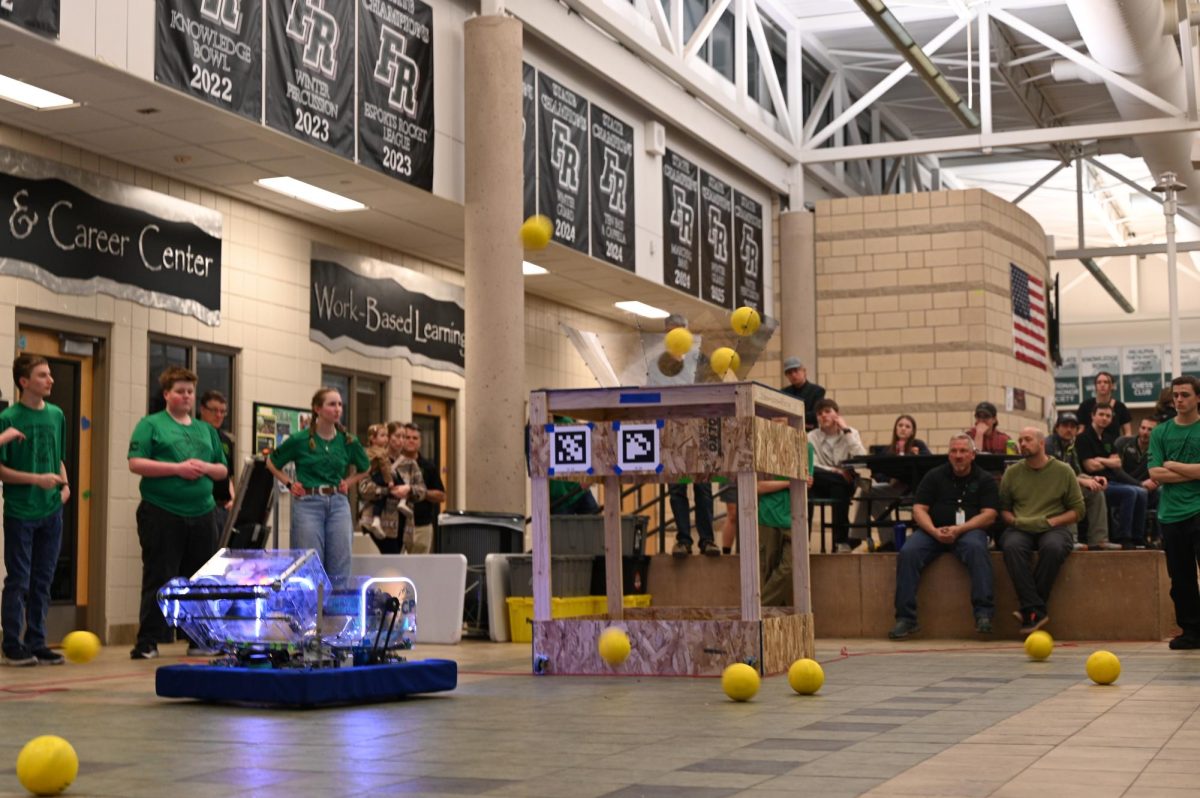
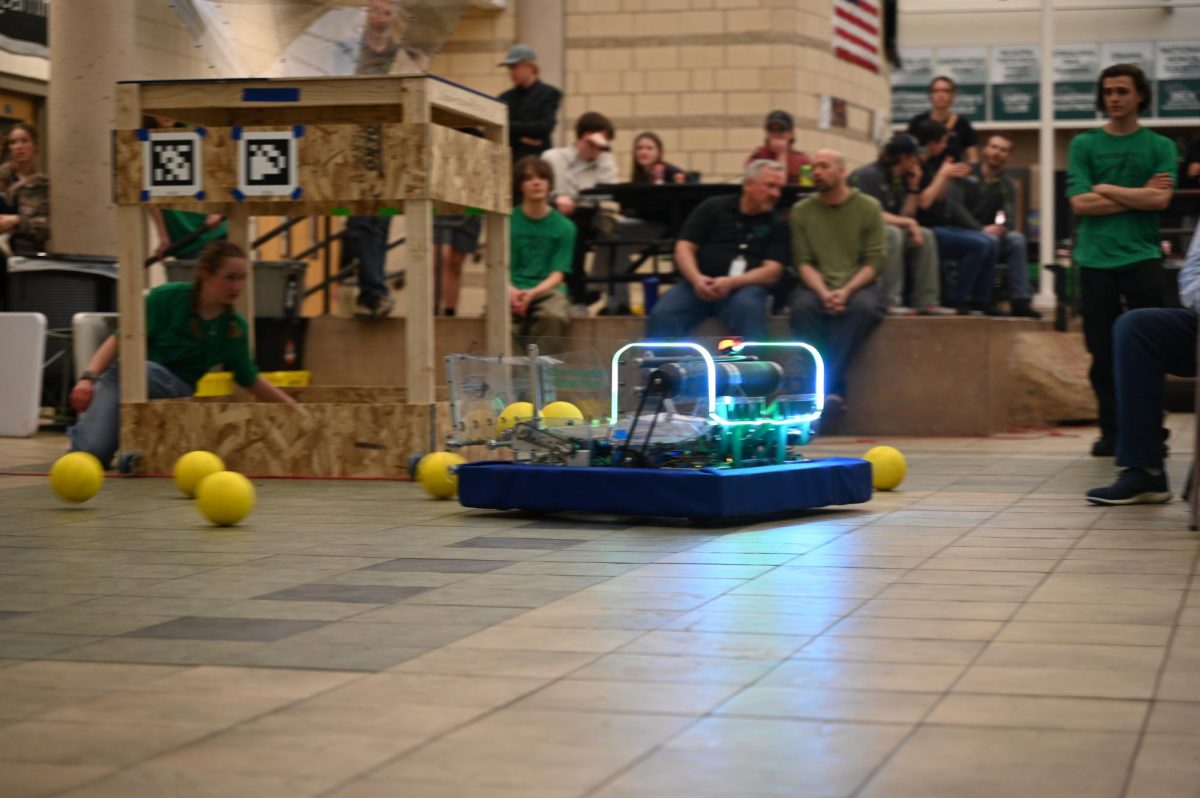
Building a competitive robot is no small job, and this year’s Ridgebotics team faced its fair share of challenges.
When asked about the most difficult part of building the robot this year, Ansel Ligon pointed to “designing our intake and just getting all of that to work.” He further elaborated, explaining that, “the intake mechanism features a roller with sandpaper on it that when it runs into the balls, it pulls them up into the robots and into our hopper, which is just a container for all of the balls to like pool into.”
While the intake presented a challenge, designing the shooter was a favorite aspect for Ansel. “One of my favorite parts was designing our shooter, specifically, all of the bracing and mounting for the shooter; we just got to use a lot of cool custom, 3D printed parts for it that I got to design,” he shared.
Ansel stated, “The main things that we changed were the layout of all of it. And while I sort of oversaw that and contributed my own ideas, I think we got a lot of ideas, and the idea that we ended up actually going with was kind of a full collective decision, rather than one person’s idea.” The team is always looking for ways to improve. Ansel mentioned wishing they had done, “a little bit more testing with rollers before we settled on a design so we could know what we were looking at, how much the arm moves up and down while intaking and how much grip it has.”
Comparing this year’s robot to last year’s, Ansel believes, “this year’s robot is significantly better than last year’s.” However, the team has had to navigate some tricky rule restrictions. Ansel noted that, “early in build season, we struggled a little bit with the perimeter restrictions on our robot because we had previously built a drive base that did not meet those. So we had to quickly redo those. And then, as of recently, we’re trying to add a climber and finish things up. We’re struggling a little bit with the weight.” The team is confident they will be able to achieve the first level of climbing.
Jenish Bhavanam expressed concerns for the competition, specifically regarding the intake, “the sandpaper might either break because there are so many holes in it, or the balls would just get ground because there’s a ton of powder on our robot.”
Among the robot’s standout features is its Auto Aim capability. Jenish described it: “It would use its camera settings, and there’s an aim button. Click on it, it auto-aims, and then it shoots according to the speed. So if you’re further away, it knows to shoot it faster, and when it’s close, it knows not to shoot as hard, so it can adjust accordingly.
When asked about the competition for this year, Jenish states, “We have many overpowered teams this year. There’s this team that’s in the top five, best robots in the entire world, competing in the Denver region. So that’d be a tight competition. They’re sponsored by NASA itself. So they have all of the equipment, all of the people, all of the extra stuff they need too. So they have, like the polished, super-powered robot.”
In essence, the 2026 robot is more than just metal and wires; it’s a culmination of strategic planning, collaborative problem-solving, and a passion for innovation. The team’s journey, marked by both challenging design hurdles and exciting breakthroughs, showcases their adaptability and engineering powers. As they head into competitions, their robot stands as a symbol of their hard work, ingenuity, and the bright future of robotics they are actively shaping.