

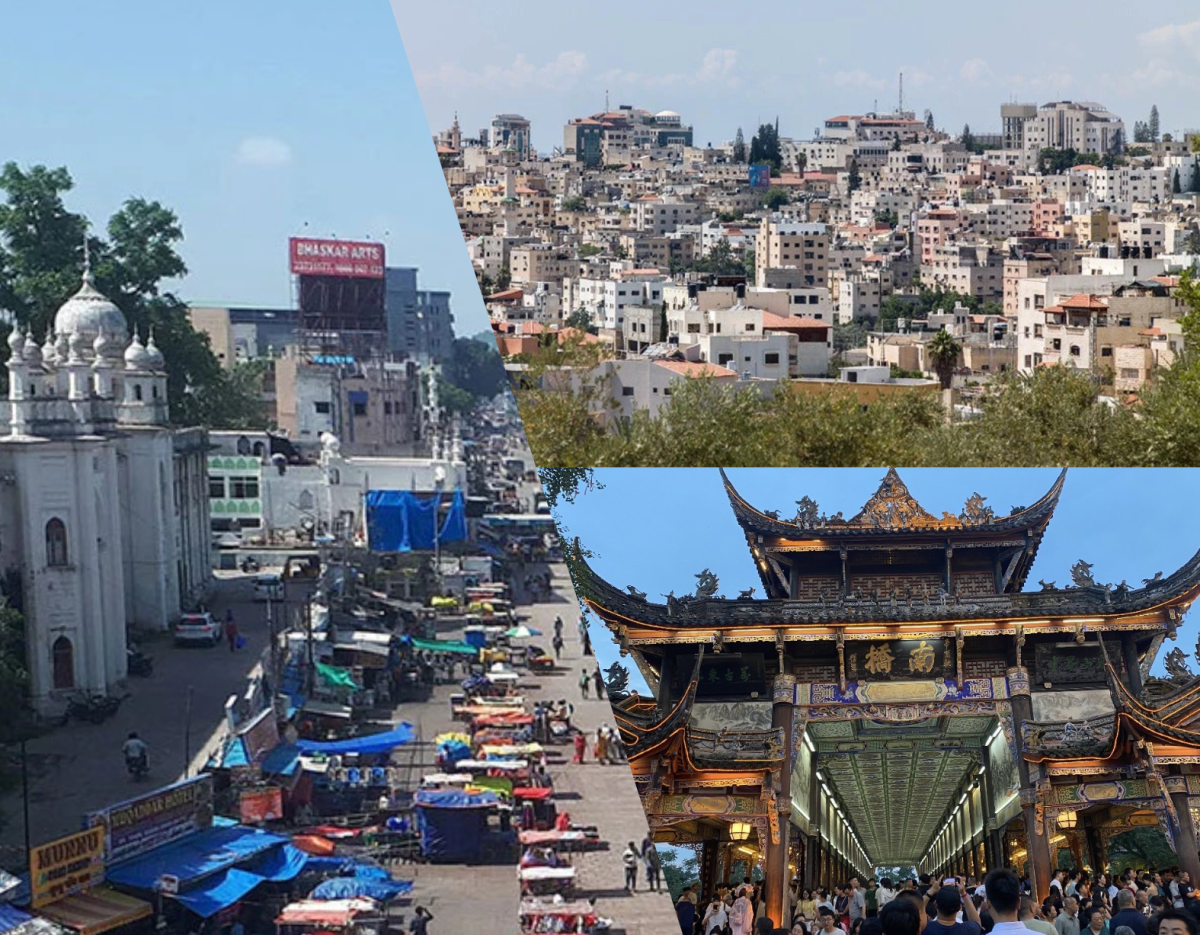
Many students at Fossil can’t visit family with a short drive or flight, but for some students that distance is thousands of miles away, across time zones and oceans.
Students with families in countries such as China, Palestine, and India navigate through similar challenges. They experience both cultures here and where their family lives, often making for a deeper sense of identity and perspective.
For junior Kathy Li, her family lives in China and that distance is something she experiences daily.
“My mom’s family is from Beijing, and my dad’s family is from another part of China further south,” Li said. “We try to visit about once a year, but sometimes that doesn’t happen.”
She explains everyone but her immediate family lives there, and that though technology helps them stay connected, it’s not everything.
“It’s more distant because we don’t get to see them or talk to them very often unless it’s over phone calls,” Li said. “It’s definitely not as close as I would like it to be.”
Her culture remains a core part of her life.
“We celebrate Chinese New Year a lot more heavily,” she said. “In China, it’s basically like a whole month off—it’s kind of like their winter break. We also celebrate the Mid-Autumn Festival, which most people here don’t really celebrate,” she added.
Another Fossil junior, Fatima Safadi, experiences a similar distance.
“We’re Palestinian, and we go back every couple of years during the summer,” Safadi said. “Pretty much everyone still lives there except my immediate family.”
She explains that her dad moved to the US for college, a common path for many immigrant families. Even with technology she experiences a similar gap in connection.
“We still call pretty regularly. It’s not super hard with internet access, but it kind of sucks having family far away, But I’m happy I get to have a different experience—it makes me more unique.”
She talks about the cultural differences between the countries.
“Here it is more individualistic,” Safadi explained. “But back there, everyone knows everyone. We’re friends with our neighbors.”
She explains how she had to adjust to the difference
“It was a bit of a culture shock growing up,” she said. “But now it’s easier to switch between cultures.”
For sophomore Akshat Gudidevuni, whose family lives in Hyderabad, India, the balance is something he embraces.
“I kind of live between two cultures, but I like it—it’s like the best of both worlds,” Gudidevuni said.
His connection to family remains strong despite the distance.
“We have a pretty good connection—my parents call our family almost every night,” Gudidevuni said.
Still, the physical distance can’t be ignored.
“It’s a little weird because other people can just visit their grandparents, but for me it’s a whole process,” Gudidevuni said.
He explains something unique to his family’s culture.
“On Tuesdays and Saturdays, my family goes vegetarian, which isn’t very common here,” he said. “And we celebrate Holi, where you throw colors at each other.” These students describe the trips as not a vacation, but stepping into part of their culture and family they don’t get to experience here.
“When I’m there, I feel more connected,” Li said. “There’s a bigger sense of community, and all my family is there.”
Gudidevuni described a similar experience.
“It’s fun because you’re not just a tourist—you’re actually part of the culture,” he said.
Safadi describes the differences she feels between cultures.
“Back there, people are more open—you can interact with people you don’t know in ways you wouldn’t here,” she said.
Li said she could see herself living with her family in the future, wanting to be connected to her culture. Safadi and Gudidevuni see themselves continuing to visit but plan on residing in the US.
Despite having different experiences, these students had a similar message about what it means to have family far away.
“Stay as connected as possible to your family,” Li said. “Because if you don’t, you lose that connection—to your culture, your family, and your history.”
Safadi shares advice to those with closer families.
“A lot of people don’t realize how lucky they are to just go to their grandparents’ house whenever they want,” Safadi said.